h1

S.P. McKelvey & Co

January 27, 2012

S.P. McKelvey & Co was a big player in the sidewalk business of late 19th Century St. Louis.  A company he helped run, The St. Louis Flagstone Company, was in the sidewalk business starting in 1882 according to The Industries of St. Louis by J. W. Leonard (1887).

St. Louis Flagstone Company. — H. L. Haydel, Cashier; S. P. McKelvey, Superintendent; Stone Sidewalks; 618 Chestnut street. — This business was established in 1882 and has been conducted with steadily increasing success from that time to the present. The company have been city contractors for paving and flagging for the past three years. They handle every description of stone and have a very large business in laying sidewalks for property owners. About a year ago, Messrs. Haydel and McKelvey bought a half interest in the firm of P. M. Bruner & Co., manufacturers of Granitoid. Up to this writing the firm have made contracts during the present year for laying over 60,000 feet of stone flagging. They possess unsurpassed facilities for carrying on work in their line, and every contract taken by them is executed in a workmanlike manner, and to the entire satisfaction of the customer. Mr. Haydel is treasurer and Mr. McKelvey secretary of the St. Louis Reclining Car Seat Co., and both are gentlemen of superior business attainments, enjoying, in a marked degree, the esteem and confidence of the business community.

In 1890, he started S.P. McKelvey & Company.

Laid 1890 - S.P. McKelvey - St. Louis, MO

From Pen and Sunlight Sketches of Saint Louis: The Commercial Gateway to the South (1892):

The marvelous improvements effected in the manufacture of material for sidewalks, driveways, cellar floors, etc., has effected a complete revolution in the cement trade, and opened up fresh fields of usefulness for its representatives. One of the principal of these in St. Louis, although but recently established, the date being August 1, 1890, is the house of Messrs. S. P. McKelvey & Co., of suite 409, Commercial building. The members of the firm are Messrs. S. P. McKelvey, Frank Sullivan and R. G. Mayhew. Mr. McKelvey is a resident of Chicago, where he is connected with the Granitoid Company of that city. The granite composition stone laid down by this firm is, as its name implies, a mixture of crushed granite with cement, and presents all the desirable features of the solid stone. It is made as required at the scene of operations, and is unrivaled for sidewalks, drives, curbs, gutters, basement floors, brewery and malt house floors, steps, copings, etc., being absolutely impervious to the weather, and as durable as the stone itself. They have just completed a very extensive set of steps for the Grand Avenue Presbyterian Church, containing ten rises twenty-five feet long, with no joints whatever. They are prepared to execute the largest contracts in this useful department of industry with promptitude, and guarantee in every case perfect satisfaction. The house is rapidly acquiring a splendid connection in the city and its environs, and some idea of its rapid development may be obtained from the fact that during the first nine months of 1891, business to the value of $125,000 was transacted. Mr. Sullivan is a native of Ireland, and Mr. Mayhew of Germany, both gentlemen being popular and respected in all circles of the city. Their office is elegant in its appointments and furniture, and has every convenience for the accommodation of customers, such as telephonic communication (call No. 1461) etc. This is a pushing and enterprising house that deservedly merits its success.

The company certainly did fine work, judging from the current state of their surviving sidewalks and by the prevalence of sidewalks that they constructed.

The following is a continued history of S.P. McKelvey & Co through photographs of dated sidewalk markers.

By 1895 the company was called McKelvey, Mayhew and Graham.

McKelvey, Mayhew & Graham - Laid 1895

Just a year later, Mayhew & Graham were alone but were including the text “Successors to S.P. McKelvey & Co” on their sidewalk markers and in their advertisements.

Mayhew & Graham - Successors to S.P. McKelvey & Co.

By 1898 Mayhew and Graham no longer needed the reference.

Mayhew and Graham - 1898

Frank Sullivan (an original member of S.P. McKelvey & Company) had parted ways at least as early as 1901 (the oldest marker of his that I’ve found), but didn’t stray too far from the format of the marker that had been used at S. P. McKelvey & Co. a decade earlier.

Frank J. Sullivan - 1902

By 1903 Graham was also out on his own.

Graham Granitoid Co. - Laid 1903

Graham was in the Granitoid business at least until 1910 (the most recently dated sidewalk marker of his that I’ve found).

Graham Granitoid Co. - Laid 1910

It’s amazing to be able to see this history preserved all over the city.  As I encounter more of this company’s work, I will post updates here.

h1

New Substation at Prospect and Scott – TOD?

December 13, 2011

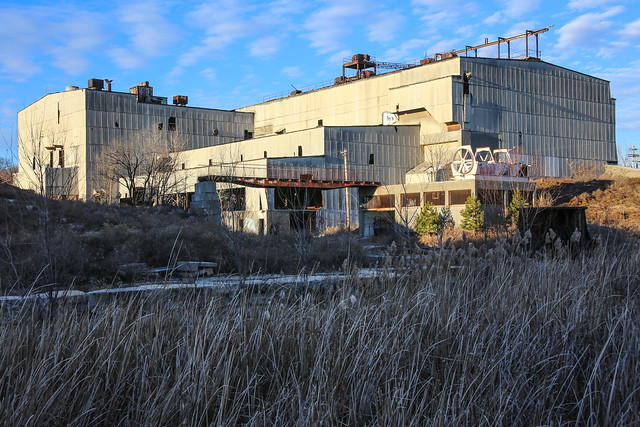
Last year I wrote about the demolition of some old industrial buildings in the block bounded by Prospect Ave, Bernard St, Spring Ave, and the railroad tracks.

Site of New Substation Before Demolition

At the time I originally noticed the demolition I was unsure of its purpose, but speculated that this had something to do with work on the Grand viaduct and Metrolink station.  However disappointed I was about the clearing of this site, the buildings were ill-suited to reuse.  The old May Company warehouse at Market and Spring was freshly renovated, and I was hoping that The Armory would be next.  The idea that a new and improved Metrolink station could attract transit oriented development there was too exciting to ignore.

Work on the New Substation

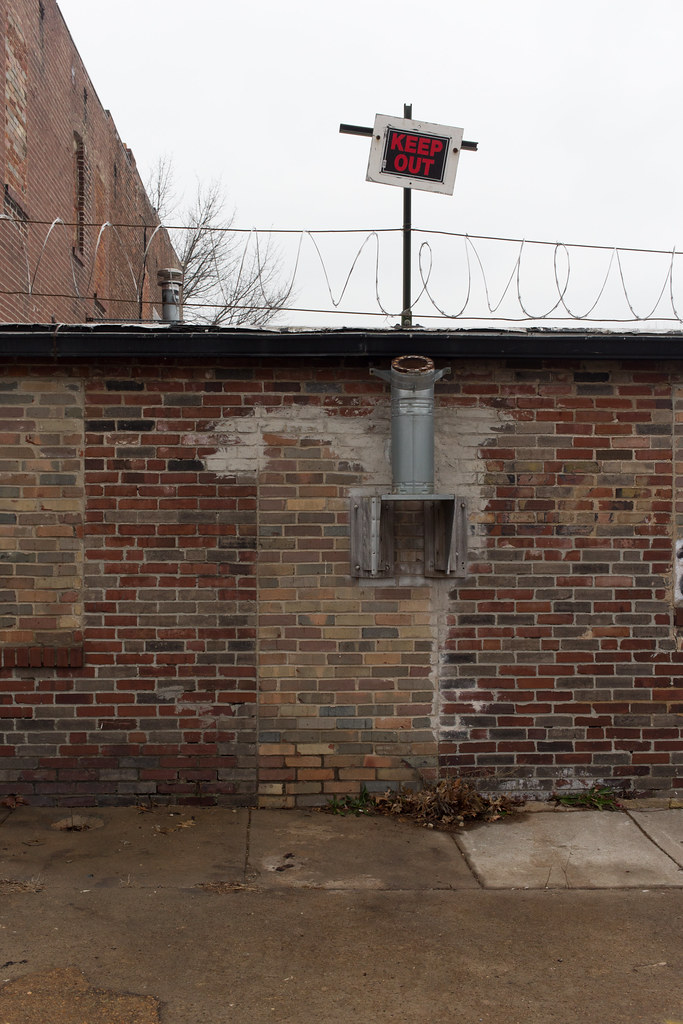
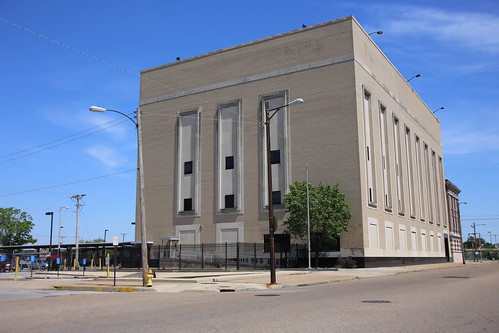
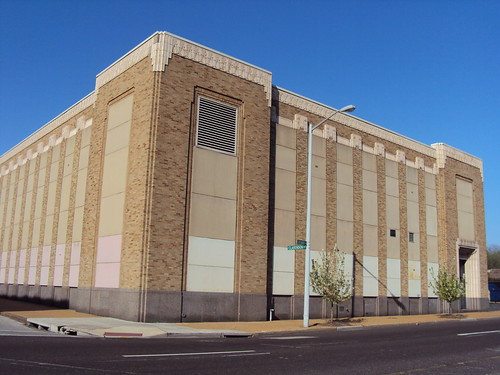
Unfortunately, upon returning to the site a couple of weeks ago, I found that a tall, permanent fence, topped with barbed wire was being installed all around the block.   Workers on the site then confirmed to me that they were constructing an electrical substation.  Even to those who considered the block’s previous occupant an eyesore, a substation will almost certainly be uglier.

h1

North Sarah Project is a Good Role Model

September 15, 2011

Construction on an exciting new development is underway in North St. Louis.  On the east side of North Sarah, between Belle and Cook, what was recently urban prairie is now being transformed by St. Louis based McCormack Baron Salazar Development.

North Sarah Redevelopment

The area in question here was once the Sarah-Finney Business district.  In Ain’t But a Place, Miles Davis reminisces about the area.

Luckily the area is going to have some business activity returned to it.  Unlike almost every new project that I have seen in North St. Louis, this one includes mixed uses: both residential and commercial spaces.

Homes under construction along Finney

The project also makes use of green technologies such as permeable pavement for the sidewalks.

Permeable Pavement

Building setbacks are pretty much non-existent on the buildings to contain commercial space, and quite small on the residential buildings.  Density appears to be relatively high, and parking looks like it will be hidden behind the residences, but also allowed on-street.  Each intersection has eight curb-cuts and well marked crosswalks.  The pedestrian experience has not been overlooked here.

New Commercial Space on North Sarah

Directly across Sarah from the southern half of the development is Turner Park, home to a softball field and playground.  Along the southern edge of development on Belle is an in-tact block of the kind of homes that make St. Louis what it is proud to be.

Belle Avenue

Sarah is a key connector to the north side, and activating this corridor is a great step toward inviting St. Louisans into the north half of their city.  With the success of the Gaslight Square redevelopment to the south and close proximity to everything in the city, I am extremely optimistic about this project.  Even without these advantages, however, the good urban planning involved makes this development a great asset to the city, and will hopefully set a good precedent for future ideas.

For more information about the project and the history of the area, please see the links below:

History of the Sarah Finney Business District

Comet Theater on Finney

NextStl Forum Topic

Construction Details

Flickr Photos


h1

More St. Louis Sidewalk Markers

August 26, 2011

This weekend I hit a lucky streak and found three sidewalk markers in the City of St. Louis that I had never come across before.  For some reason, in other cities I am able to spot these sidewalk stamps all over the place, but in St. Louis they’re able to elude me.  After this weekend, however, I am sure that there are many more out there.

Mayhew & Graham Granitoid - Laid 1899 St. Louis, MO

In the above photograph is my first spotting of the weekend.  It is located directly in front of the entrance to the St. Louis Braid Co. on Lucas Street, a location where I am sure it is appreciated.  On Google books I was able to find an advertisement for Mayhew & Graham in the 1896 publication, Water and Sewage Works, Volume 11.

Mayhew & Graham - Room 409 Commercial Building

According to an article in the same publication, Mayhew and Graham was reported as having “just completed a contract…for laying…eight miles of sidewalks in…Choteau Place”, referring to the Choteau Place Addition in the Greater Ville.

F.B. Klein Granitoid

This next sidewalk marker, from the F.B. Klein Granitoid Company, also has a little bit of history that can be traced via Google.  Located at 1424 Blair Avenue just north of Downtown, F.B. Klein was at least an occasional buyer of P.M. Bruner’s Granitoid according to the clipping below.

Bruner v. Klien

Ironically, just a few yards ahead of the F.B. Klein marker was a P.M. Bruner.

P.M. Bruner Granitoid

At this point I have come across many P.M. Bruner Sidewalk Markers (at least two different variations) and have seen even more in photographs on the internet.  His influence may spread at least as far as Seattle, as my speculative post from earlier this month suggests.

Granitoid Flagging

The above sidewalk marker, the last of my three new discoveries this weekend, is a very interesting example.  An intact, but otherwise identical, copy of this marker on DJDenim’s Flickr stream  shows the address on the sidewalk marker as 512 S. Jefferson Ave.  According to the American Engineering Register of 1885, the resident at the address was a Civil Engineer by the name of Bruner, P.M..  A US Supreme Court Case available to read about on Google Books has Bruner getting sued for a concrete pavement related patent infringement in 1887.  With this information it is not much of a stretch to assume that he was a sidewalk contractor while still at his address on South Jefferson.  Thus, it is highly likely that the Granitoid Flagging marker above represents the work of P.M. Bruner, a man that we already know is responsible for so many of our city’s surviving historic sidewalks.

Stretch of Different Sidewalk Squares

This exercise of researching sidewalk contractors using Google demonstrates the ability of the search engine, and the value of the these remarkable links to the past.  As I learn more about this one aspect of cities, my overall understanding of their urban histories is increased as well. To see my entire collection of sidewalk contractor stamp/marker photos, visit this flickr map.  Locations are often only as specific as the city that the sidewalk is in, but are sometimes more accurate.

Update:

This afternoon I went up to The Ville and found three sidewalk markers that correspond with the 1896 article on Mayhew & Graham.

Mayhew & Graham - Laid 1896

Pretty cool, huh?

And here is a flickr set of all my St. Louis sidewalk marker photos.

h1

Modern Streetcars could be coming to Downtown Kansas City

August 23, 2011

Today, while randomly exploring Kansas City, I walked into Union Station during a Open House event featuring a modern trolley that KC leaders would like to see downtown by 2015.  The model on display, courtesy of Kinkisharyo, was a new ameriTRAM designed specifically for American cities wishing to bring back streetcars.

ameriTRAM on Display in Kansas City, MO

Its bragging points include a 100 percent low floor and an “e-hybrid” system designed to run on overhead power or lithium-ion batteries for up to five miles.  Even while operating on batteries it has several security cameras, wireless internet, and lcd information screens.   The light weight cars will not necessitate bridge replacement on the proposed routes through downtown Kansas City, and will help to lower the cost of laying track.  Because the plans include only routes that are around two miles long, overhead wires are unnecessary, eliminating not only a possible eyesore but also the associated expenses.

Map of Proposed Streetcar Routes in Downtown Kansas City

Coincidentally, the length of the Loop Trolley in St. Louis is approximately two miles long as well.  Could our local streetcar project use the ameriTRAM?  Could completely eliminating overhead power help lower the price tag?  One of the first things that this blog did was come out against the Loop Trolley project.  I still don’t think that this particular implementation is a great addition to our transit system because it does little more than duplicate the coverage of the Metrolink and the 97 Delmar Bus.  Other critics have argued that it just connects Blueberry Hill to the Pagent.  If the project is perceived as a failure, it could help prevent new investment in more substantial public transit infrastructure in the future.  On the other hand, streetcars are awesome, and the potential for this project to spur expansions is too exciting to ignore.  To best take advantage of this opportunity, we must make sure that the Loop Streetcar is effective and well received.  One easy and substantive way to make this project more legitimate is to use cutting edge technology – the latest modern streetcars.  In my opinion, a sleek, modern and attractive streetcar will be even more enticing to the curious pedestrian or motorist than a replica of a historic trolley.  I think it’s an option worth considering.  The advantages are considerable.

h1

P.M. Bruner Sidewalk Lights in Seattle, WA

August 3, 2011

As I walk down unfamiliar sidewalks I make sure not to ignore the ground, always on the lookout for sidewalk markers.  Due to this conditioned vigilance, I have accumulated a decent photographic collection of these markers from cities all around the country.  Right now for example, I am in Aurora, IL, a Chicago Exurb whose attractive city center is loaded with sidewalk markers that I am quite happy to have stumbled upon.  This particular sidewalk contractor stamp includes an exact date:

Happy 29th Birthday!

The details that some sidewalk stamps carry provide starting points for research that can reveal much about a city’s past.  While visiting Seattle last month I came across a nice selection of sidewalk stamps and markers, the bulk of them concentrated in Pioneer Square.  Pioneer Square has a remarkable history as Seattle’s original downtown.  After the “Great Seattle Fire” of 1889 (seems like every American city has had a great fire), the city began rebuilding immediately, but soon after reconstruction had begun planners made the decision to raise the streets up a story to remedy a problem with flooding during high tide.  During this transition, building entrances were moved up to what became street level, and new sidewalks were built one story above the old ones.  Because the original ground level entrances were sometimes still in use underground, many sidewalks in this area have skylights to allow light into the passages below.  A popular tourist attraction, the Seattle Underground Tour, allows you to walk along some of these underground sidewalks and listen to bad jokes.

Sidewalk Skylight as Seen from the Underground Tour

These skylights are all over Pioneer Square and are hard to miss for even someone with only a casual interest in sidewalks (I assume).  The fact that so many of the sidewalks in Pioneer Square are over 100 years old is awesome to me, but, after almost a month in Seattle and regular trips to Pioneer Square and other sections of the city’s historic core, I stopped carrying my camera after dark.  I figured that anything I was interested in, I had already photographed several times.  Thank God for camera phones, because on one of my last nights in Seattle I looked down and saw this:

Installed by L.A. Norris - Bruner Patents

This sight brought me back almost to the beginning of my relationship with sidewalk markers.  An interest that began after coming across a St. Louis Sidewalk Company sidewalk marker.  After making this initial discovery I started enthusiastically searching the internet for more, and the first bit of gold I struck was a flickr photo of a P.M. Bruner Sidewalk marker in Tower Grove East.  I immediately began walking blocks in the neighborhood until I found them myself, and since then I have come across several identical markers in other sections of the city.

P.M. Bruner Sidewalk Marker

Almost every new sidewalk marker I see gets its text googled, and this one was no exception.  Unlike most cement contractors, however, P.M. Bruner has a pretty serious online presence, particularly if you perform a Google Patent search.  Interestingly enough, Preston Martin Bruner of St. Louis, Missouri holds several patents for Sidewalk Lights that closely resemble those visible in the photo of L.A. Norris’ sidewalk.

Sidewalk Light Construction - P.M. Bruner

Is it possible that a St. Louisan designed this technology that helps make Seattle’s Pioneer Square so cool?  It is very possible, but unfortunately, all I can do is speculate and continue to keep my eyes and ears open.  If anyone has more information on this subject, please share.

Update:

I found a website with a photo of a P.M. Bruner sidewalk with “vault lights” in Houston, TX.

h1

Seattle’s Pedestrian Master Plan

July 1, 2011

I’ve spent the last week or so in Seattle, and have been extremely impressed with the city.  Seattle’s Central City is a continuous, walkable urban environment, that is unlike the vast majority of American cities I’ve been to.  In Seattle, the “inner-city” is a truly desirable place to be (as it should be).  Although it is not completly free of empty storefronts and surface parking lots, when compared to a place like St. Louis these underused spaces are a non-issue.

Seattle has its problems too

I am aware that Seattle and St. Louis have more differences than similarities, but I disagree with those who say we have nothing to learn from a city so dissimilar.  Seattle’s Metropolitan Area is not significantly larger than St. Louis’ (only having recently surpassed us), but it has the resources to experiment.  We need to be paying attention to even our more distant peers if we want to stay competitive.

Section of Chinatown cut off from Downtown by Interstate 5

Seattle has made many of the same mistakes that St. Louis has.  They have an interstate highway running through their downtown.  They have two major sports stadiums that take up superblocks and are surrounded by underused parking garages in a historic district.  At the same time, they value good urban design and the pedestrian experience.  For me, Seattle has many new ideas to offer.  Good ideas.  One big one that struck me is the Downtown Transit Tunnel.

The Downtown Seattle Transit Tunnel

Seattle’s Light Rail runs through Downtown in a tunnel, but the tracks run on a paved, flat surface that is also used by buses.  This is brilliant for many reasons (it keeps you out of both traffic and the rain), and is a flexible infrastructure investment.  My one complaint is that you aren’t allowed to simply walk across the tracks to the other platform to change directions.

Illegal to Cross

As convenient as being able to walk across the tracks would be for an urban explorer and photographer like myself, walking up and over is a small sacrifice for us to make on behalf of public safety.  The City of Seattle actually cares about pedestrians and their safety, and it shows.  Little details can make big differences.  This year Seattle was recognized as the most “walk-friendly” city in the country by the NRDC, and in the City’s Pedestrian Master Plan, Seattle declares that it wants to truly become the most walkable city in the nation.

Alternatives to the Car

Featuring before and after photos of transformed sidewalks that would be sure to make Steve Patterson proud, the Pedestrian Master Plan’s website lays out a detailed plan with ambitious goals that focus on the pedestrian experience.  It outlines the benefits of walking and the responsibility of the city to encourage and to facilitate alternatives to personal automobiles.

Seattle has a Large Network of Trolley Buses

I think that the City of St. Louis can learn from cities like Seattle.  Our problems are not unique to the rust belt, and their solutions might found if the time was spent creating something like a master plan.  We have a long way to go before we can even compete in a walkable city competition, but we need to start with a coherent (unlike many of my blog posts – Sorry!) and comprehensive plan.  Let’s start Downtown and connect our neighborhoods to one another.  Otherwise newer, faster growing cites like Seattle will leave us in the dust.  Or in the fumes of our own exhaust.

h1

Vote for Cahokia Mounds! Only Three Days Left!

June 27, 2011

The National Trust for Historic Preservation is currently hosting a Community Challenge that will give the three historic sites with the most votes a cash prize.  Currently, Cahokia Mounds is ranked 13th and will require a big push during the last three days of voting to make it into the top three.

As a UNESCO World Heritage Site, Cahokia Mounds gives the St. Louis Area an extremely unique International attraction.  While visiting Berlin recently, I found many references to Museum Island‘s designation as a UNESCO site.  This is a source of great pride for the people of Berlin.  Unfortunately, I don’t think that most St. Louisans appreciate the significance of Cahokia Mounds and are unaware of its status as a World Heritage Site (nobody in my family knew that we had a UNESCO site in St. Louis when I mentioned it in Berlin).  This is our chance to both contribute to Cahokia Mounds, and to help spread the appreciation of our history that the United Nations recognizes while many locals fail to.

If the flying saucer on Grand is worth fighting for, Cahokia Mounds certainly is too.

Click on the image above to register, and cast your vote for Cahokia Mounds.

h1

The 10th Street Mall in LaSalle Park

June 21, 2011

A few weeks ago I had the day off and needed to take my car to the shop, so for the first time in a while I was able to do some St. Louis Exploring.  For lack of a better idea, I simply took the bus downtown and starting walking toward Soulard, knowing that I didn’t really have a good grasp of what lay in between.  The dead zones between our “destination neighborhoods” are one of the biggest problems St. Louis has to tackle.

LaSalle Park

Crossing under Highway 40 on Broadway I entered LaSalle Park, a hidden gem nestled between Soulard, Layfayette Square and Downtown.  The neighborhood is cut off from the rest of the city by highways, and the damaged street grid leaves its few surviving blocks particularly isolated.   A Pedestrian Mall replaces Tenth Street from Hickory to Park Avenue, effectively separating the renovated historic homes to the east, from the mess of urban renewal to the west.

Tenth Street Mall in LaSalle Park

Dead-end streets north of Park on Ninth Street have been turned into cul-de-sacs, but they are shady, quiet, relatively dense, and feel great to walk down.  Large bushes visually separate the cul-de-sacs from the pedestrian mall, but the sidewalks merge into it.  The mall itself is both devoid of life and overgrown.

10th Street Pedestrian Mall from Park

In many ways, the Tenth Street Mall reflects St. Louis urban planning in general.  It has preservation on one side and auto-centric modern development  on the other.  It has glaring successes and failures.  It is cool and attractive but also lacks maintenance and use.  For many, however, it seems that LaSalle Park has the best of both worlds.  It is in the middle the city, but feels suburban in many ways.  It’s both old and new.  It has a totally random pedestrian mall running through part of it; and apparently that’s what people like because LaSalle Park is one of a small handful of St. Louis City neighborhoods to have gained population in 2010.  If you haven’t been, go check it out – the experience is quite pleasant.

More photos of LaSalle Park can be found here.

h1

Cowan Street

May 2, 2011

Today I was randomly driving around the city when I passed what looked like a bombed out church just a stone’s throw from Interstate 70 on Prairie Avenue.  For some reason I felt a need to park my car and investigate on foot, a decision that led me to stumble upon a small and forgotten North St. Louis Street – Cowan Street.  The St. Louis Public Library’s Index of Street Names offers us a brief history:

COWAN STREET (E-W). Appeared in the 1854 subdivision of West Lowell. The name originated in the Irish and Scottish as “dweller in a hollow; worker in metal, a smith”. There is a Cowan, Tennessee, and a town and lake in Canada named Cowan. No specific personal attachment has been found for a St. Louisan, however. (Hyde Park & Bissell-College Hill)

Cowan Street

The current state of the street is terrible, with just two shells of unsalvageable buildings remaining on it.  Originally only one block long, the street was truncated into a dead end as soon as Highway 70 was built, severing it’s connection to Broadway.

Cowan Street on Bing Maps

Approximately 100 years ago, this little street was home to Wagon Making, Mushroom Tunnels, a Church, School, homes and more.

Cowan Street in 1909 - From a Sanborn Fire Insurance Map

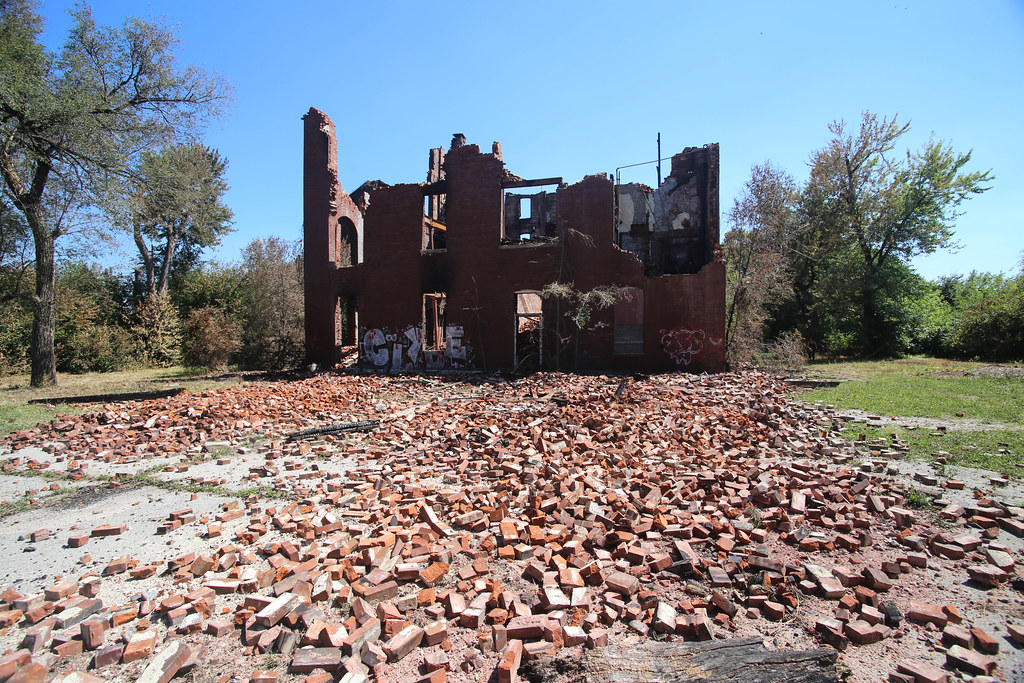
Today, St. Paul’s Lutheran School is two walls rising from a pile of rubble.  As can be seen above in the screenshot from Bing Maps, the school was standing fairly recently, and even hosted basketball games.

St. Paul's Lutheran School

However small Cowan Street is, its loss is a loss for the whole city.  I hope that some new development is lined up to capitalize on this site’s visibility from the interstate, but have little reason to be optimistic.

Follow

Get every new post delivered to your Inbox.

Join 645 other followers